

Barcelona-Catalonia’s life sciences moment
Life Sciences
29 Jan 2026
Barcelona-Catalonia, Spain's most technologically advanced region, has quietly become one of Europe’s most compelling life sciences growth stories, increasingly on the radar of U.S. executives looking for a European base that can scale.
On a clear morning in Barcelona, it’s easy to miss what’s happening here. The beaches, the modernist skyline, the café-lined streets -none of it screams advanced therapies, digital health, or artificial intelligence. And yet, Barcelona-Catalonia, by far Spain's most technologically advanced region, has quietly become one of Europe’s most compelling life sciences growth stories, increasingly on the radar of U.S. executives looking for a European base that can scale.
The ecosystem is dense and unusually connected: pharmaceutical leaders, biotech and medtech firms, top research centers, high-performing hospitals, and a fast-growing digital health layer that sits on top of it all. Today, more than 1,400 life sciences companies operate across Catalonia, spanning drug development, medical devices, digital health, and emerging areas such as cell and gene therapies. What stands out is not only volume, but how quickly ideas move from research to implementation -because the network is built to collaborate, not just coexist.
Why U.S. companies are looking here
That connectivity helps explain why several U.S.-linked players have already anchored operations in Catalonia. Amgen, Teladoc Health, and Zoetis use Barcelona as their strategic platform for European or global work. A highly visible signal of confidence came from AstraZeneca–Alexion, which opened one of its largest European R&D hubs in the city, backed by a €1.3 billion investment planned through 2027. That kind of long-horizon commitment sets Barcelona as a place where serious life sciences work gets done.

A cost-and-talent equation built for scale
For U.S. companies facing intense pressure to control R&D spend without slowing innovation, Barcelona offers a compelling equation: operating and labor costs often 40%–60% lower than traditional European hubs -while maintaining strong research standards and productivity.
Just as important is the talent profile. Catalonia attracts international, mobile professionals who come for opportunity -and stay for quality of life. In practice, that creates teams that are multilingual, cross-functional, and comfortable operating in global contexts.
This talent is increasingly working at the intersection of health and technology. Barcelona has become a base for health-related tech operations, with Roche, Boehringer Ingelheim, Bayer, Novartis, Sanofi, and others establishing digital, data, and innovation hubs. These centers focus on capabilities that now sit at the heart of modern life sciences: real-world evidence, data analytics, software development, and digital therapeutics.
Where design meets biotech innovation
Barcelona’s competitive edge is also cultural: it’s a design-forward city with a deep engineering and scientific base -an advantage in a sector where differentiation increasingly depends on how products are built, adopted, and experienced.
For life sciences companies, that design capability shows up in three ways: digital health and patient experience, medtech and device innovation, and operational and manufacturing innovation. For executives evaluating expanding to Europe, this "design + biotech + data" combination can translate into quicker learning loops and better product-market fit -without sacrificing scientific rigor.

Artificial intelligence is no longer a side narrative here -it’s a pillar. According to IBM’s Global Location Trends 2025, Barcelona ranks third globally for attracting AI investment projects, placing it ahead of most tech capitals. In healthcare, this AI momentum feeds directly into Catalonia’s growing role in personalized medicine and advanced therapies.
Initiatives such as the EU-backed PRECISEU project connect advanced therapies, health data, and AI capabilities, supported by organizations including Biocat, Vall d’Hebron, and the Barcelona Supercomputing Center -a combination that strengthens the region’s position for the next wave of data-driven medicine.
Infrastructure designed for the next decade
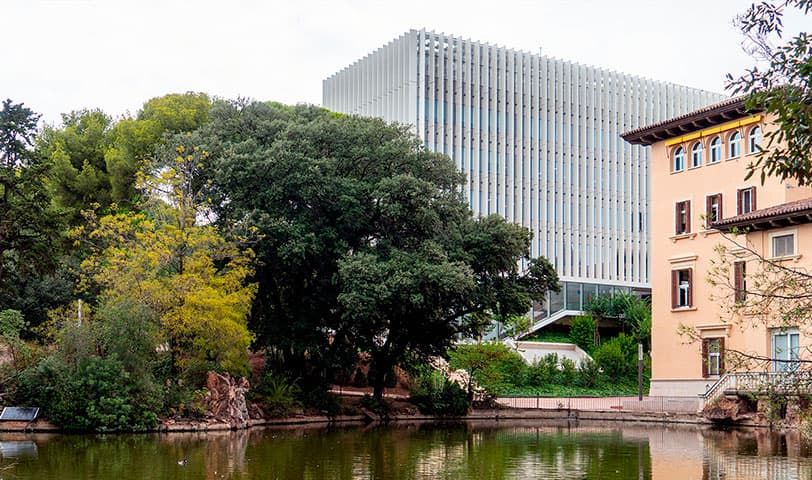
Momentum is reinforced by major projects reshaping the research landscape. The new Clínic–University of Barcelona Health Campus is a €1.7 billion investment designed to integrate care, research, and innovation at scale. Nearby, the CaixaResearch Institute is pursuing a ten-year roadmap to become a global reference in immunology, with plans to host 45 research groups and more than 500 professionals. Beyond, the planned BioCluster of Innovation and Health aims to transform the metropolitan area, with projections of up to 50,000 new jobs over the next two decades.
Barcelona and Catalonia’s life sciences rise hasn’t been sudden. It has been built deliberately -through talent, infrastructure, and an ability to blend science with technology and design. For U.S. companies scanning Europe, Barcelona-Catalonia has become more than an appealing destination. It’s a unique operating advantage.
Next step: get the investment playbook
Discover the data, cost benchmarks, case studies, and landing options shaping this ecosystem in the full whitepaper -designed for executives evaluating expansion, partnerships, or investment in Europe.


Multimedia gallery.


Discover our services.
-

Setting up your company
See moreCatalonia Trade & Investment assists foreign companies in starting a business in Barcelona-Catalonia.
-

Business Location Service
See moreGet all the information about Barcelona-Catalonia industrial buildings, land, business centers, or office spaces.
-

Financing & Incentives
See moreAs a Catalan government agency, we provide expert support and financial aid for your business in Barcelona-Catalonia, assisting you throughout the process.




Talk to us


Health & Life Sciences
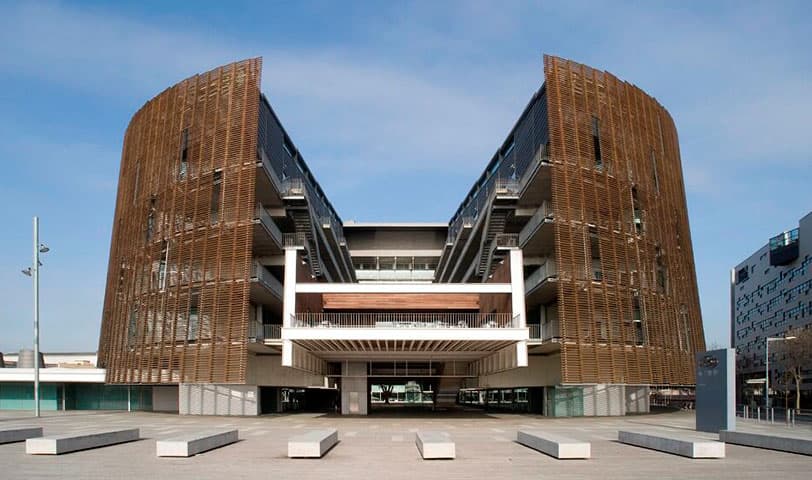
Catalonia has 93 leading scientific, technical and research centers working in the health, well-being and life sciences industries.
More News and Success Stories.
-
28 Sep 2026
See more Anaconda Biomed secures €49 million for its stroke technology produced near BarcelonaAnaconda Biomed secures €49 million for its stroke technology produced near Barcelona
-
07 Sep 2026
See more British startup Tolemy Bio chooses Barcelona to advance AI solutions applied to the production of advanced therapiesBritish startup Tolemy Bio chooses Barcelona to advance AI solutions applied to the production of advanced therapies
-
22 Jul 2026
See more Taiwanese company TCI invests €20 million in Barcelona to establish its first European production and R&D centerTaiwanese company TCI invests €20 million in Barcelona to establish its first European production and R&D center
-
17 Jun 2026
See more Catalan startup Gate2Brain raises €7 million from India's Shilpa Biocare to accelerate brain cancer drug developmentCatalan startup Gate2Brain raises €7 million from India's Shilpa Biocare to accelerate brain cancer drug development
