

The robotics sector in Catalonia doubles over the past five years and now generates €1 billion in turnover
International Events · Tech & Digital Transformation
08 May 2026
The new report by Catalonia Trade & Investment emphasizes the expansion of Industry 4.0, the increasing digitalization of the industrial base.
The robotics sector in Catalonia has more than doubled over the past five years and now generates a turnover of €974 million (2024 data). This is one of the main conclusions of a study by ACCIÓ-Catalonia Trade & Investment, the agency for business growth belonging to the Ministry for Business and Labour, which indicates that there are currently 311 Catalan companies operating in the sector, employing 4,634 people.
The report emphasizes the expansion of Industry 4.0, the increasing digitalization of the industrial base, and the growth of companies specializing in autonomous robots and drones as the main drivers behind the sector’s growth.
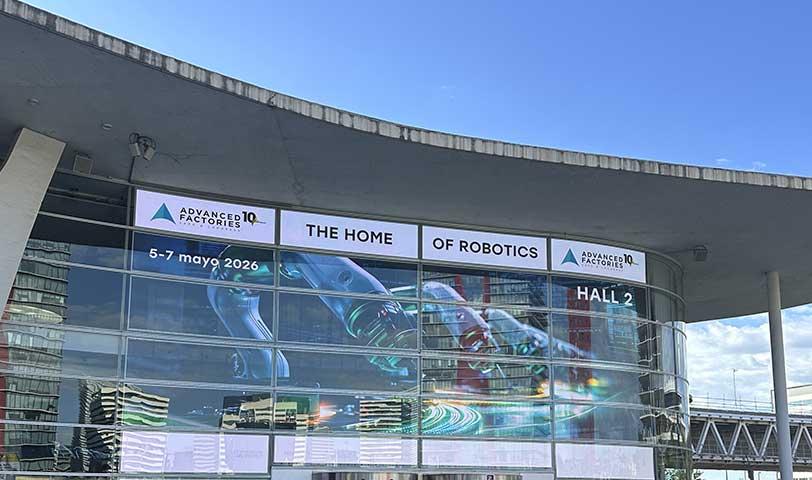
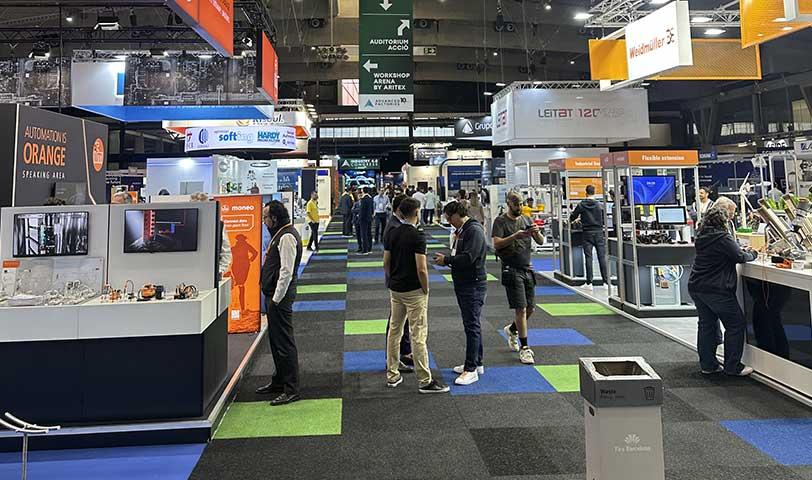
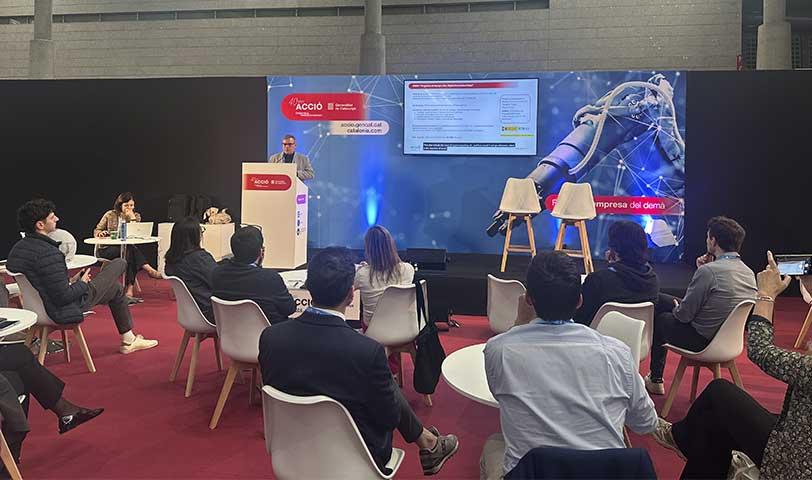
The announcement was made by the Minister for Business and Labour, Miquel Sàmper, during the Advanced Factories trade show, which took place this week in Barcelona.
The robotics value chain in Catalonia includes robot manufacturers (18%); integrators (38%), which design and build automated solution systems incorporating robots; and companies in the auxiliary industry (44%), including consulting services, manufacturing firms, and suppliers of components, software, and enabling technologies, among others.
According to the report, 87% of robotics companies in Catalonia are SMEs, and 14.5% are startups. The study also highlights that nearly half of all companies (44%) are exporters, while 30% report turnover above €10 million.
In terms of application sectors, 72% of companies provide robotics solutions applied to industry, mainly in areas such as automotive, food, and packaging. In the services sector, healthcare and audiovisual industries stand out, showing a notable increase in the use of robotics. The report also identifies clear applications of robotics in logistics, as well as in areas such as security, inspection and maintenance.

Catalonia strengthens its attraction for robotics investment
The study also identifies the strengths that make Catalonia an attractive environment for the development and investment in robotics. Over the last five years (2021–2025), Catalonia has attracted a total of 14 foreign investment projects in robotics, representing nearly €58 million in investment and creating more than 600 jobs.
Over this period, Catalonia ranked sixth worldwide in terms of the number of foreign investment projects attracted in robotics. Furthermore, it also became the second region in the European Union, only behind North Rhine-Westphalia in Germany, and the leading region in Spain, accounting for more than half of all projects attracted nationwide (52%).
Finally, the study highlights the key technology and research centers in the region that drive the development of the robotics ecosystem, including the Computer Vision Center (CVC), Eurecat, Leitat, the Institute of Robotics and Industrial Informatics, and ViCOROB. In terms of initiatives to foster innovation, the report underlines the role of DIH4CAT, a connected network of Catalonia’s main technological infrastructures, led by ACCIÓ-Catalonia Trade & Investment, and which provides access and support for technological experimentation with the aim of accelerating digital transformation among SMEs and startups. In fact, DIH4CAT has managed 671 projects over the past four years, 44% of which have focused on robotics and advanced manufacturing.
Trends, opportunities, and challenges
The ACCIÓ-Catalonia Trade & Investment study also identifies the main trends in the field of robotics. In this regard, it highlights humanoid robotics, which involves the gradual integration of robots with human-like characteristics capable of performing tasks in environments designed for people. In Catalonia, nearly a dozen companies are already working on the development of these systems. The report also points to other trends such as autonomous mobile robots and drones, which are reshaping a range of industries; robotics applied to healthcare, improving clinical efficiency and patient quality of life; and the integration of artificial intelligence, enabling a shift towards intelligent and self-adaptive systems across varied environments.
Regarding future opportunities and challenges, the study highlights initiatives such as consolidating robotics in healthcare to position the region as a benchmark for innovation; increasing robotization to address labor shortages in repetitive and physically demanding tasks; and leveraging the industrial base and existing robotics leaders to drive adoption and improve productivity and resilience. At the same time, it identifies several challenges, including the need to strengthen technological sovereignty in the face of low-cost international competition, simplify regulation to accelerate the deployment of robotics, and address talent shortages through enhanced training, attraction, and retention of qualified professionals.
For the preparation of the study, a series of interviews were conducted with the following companies, organizations, and research centers, which contributed their perspective on this technology: AER Automation, the CVC, DFactory, the Association of Industrial Engineers of Catalonia (EIC), Eurecat, the Institute of Robotics and Industrial Informatics, Iqua Robotics, Kuka, LabORA, Leitat, PAL Robotics, Saltó and Theker.
Government support for the robotics ecosystem
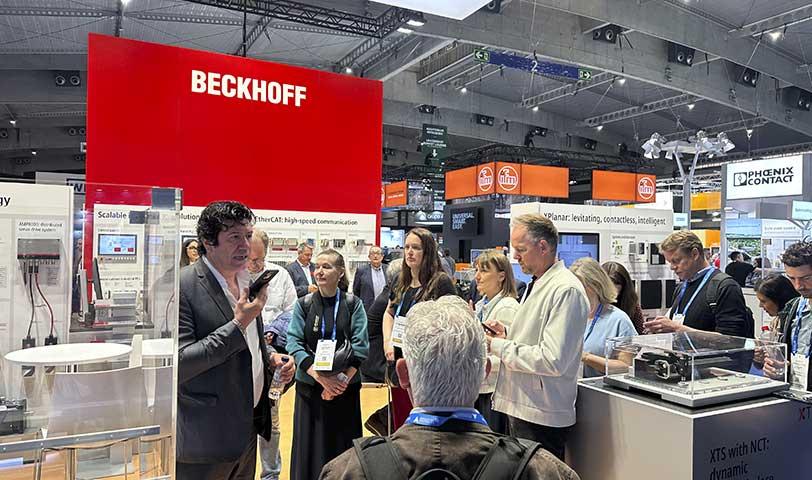
Advanced Factories, the leading international event for industrial innovation and Industry 4.0, took place this week at Fira de Barcelona. In this context, the Government, through ACCIÓ-Catalonia Trade & Investment, promoted a range of initiatives and activities within the framework of the fair to encourage the adoption of these technologies across Catalonia’s industrial base.
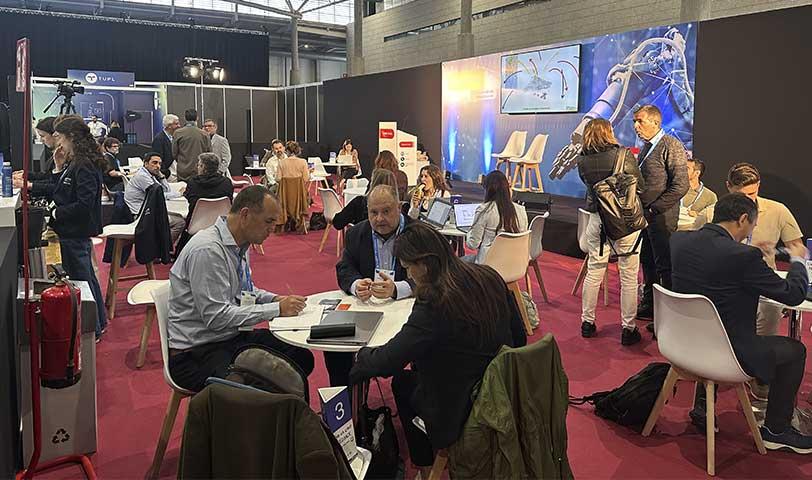
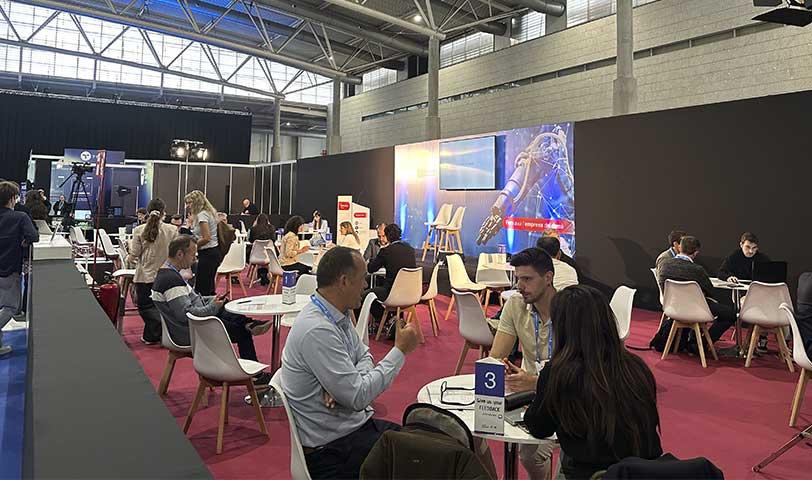
One of these initiatives was the AI Innovation Meetings, where industrial companies facing artificial intelligence challenges met with specialized technology providers and startups to explore innovative solutions for their production processes.
In addition, the event hosted the Tech Meetings. These sessions enabled participating companies to connect with technology experts and specialists from the Digital Innovation Hub of Catalonia (DIH4CAT AI Connect), who provided access to advanced infrastructures to assess how they can help address business challenges through technologies such as robotics, additive manufacturing, cybersecurity, advanced AI computing, photonics, nanotechnology, and advanced materials, among others.


Multimedia gallery.


Discover our services.
-

Setting up your company
See moreCatalonia Trade & Investment assists foreign companies in starting a business in Barcelona-Catalonia.
-

Business Location Service
See moreGet all the information about Barcelona-Catalonia industrial buildings, land, business centers, or office spaces.
-

International Mobility for Executives
See moreWe will guide you through the international mobility process from start to finish.



Robotics
40% of Catalan firms depend in some way on automated processes, today we can clearly see that there are immense advantages to incorporating robotics into productive systems.
More News and Success Stories.
-
09 Oct 2026
See more Catalonia to gain new advanced robotics and physical AI hub with ABB RoboticsCatalonia to gain new advanced robotics and physical AI hub with ABB Robotics
-
05 Oct 2026
See more Clio makes a long-term bet on Barcelona to develop the AI behind its legal platformClio makes a long-term bet on Barcelona to develop the AI behind its legal platform
-
04 Sep 2026
See more Barcelona ranks first in Europe and third worldwide for AI foreign investment projectsBarcelona ranks first in Europe and third worldwide for AI foreign investment projects
-
31 Jul 2026
See more Barcelona-based Openchip unveils BER10, advancing Europe's digital sovereigntyBarcelona-based Openchip unveils BER10, advancing Europe's digital sovereignty
